Collaboration Models icon Collaboration Models

How Institutions work with Academy

Batoi Academy offers structured collaboration models that enable institutions, enterprises, and public organizations to engage meaningfully while preserving clarity of roles, responsibilities, and outcomes. These models are designed to support long-term partnerships rather than one-off engagements.

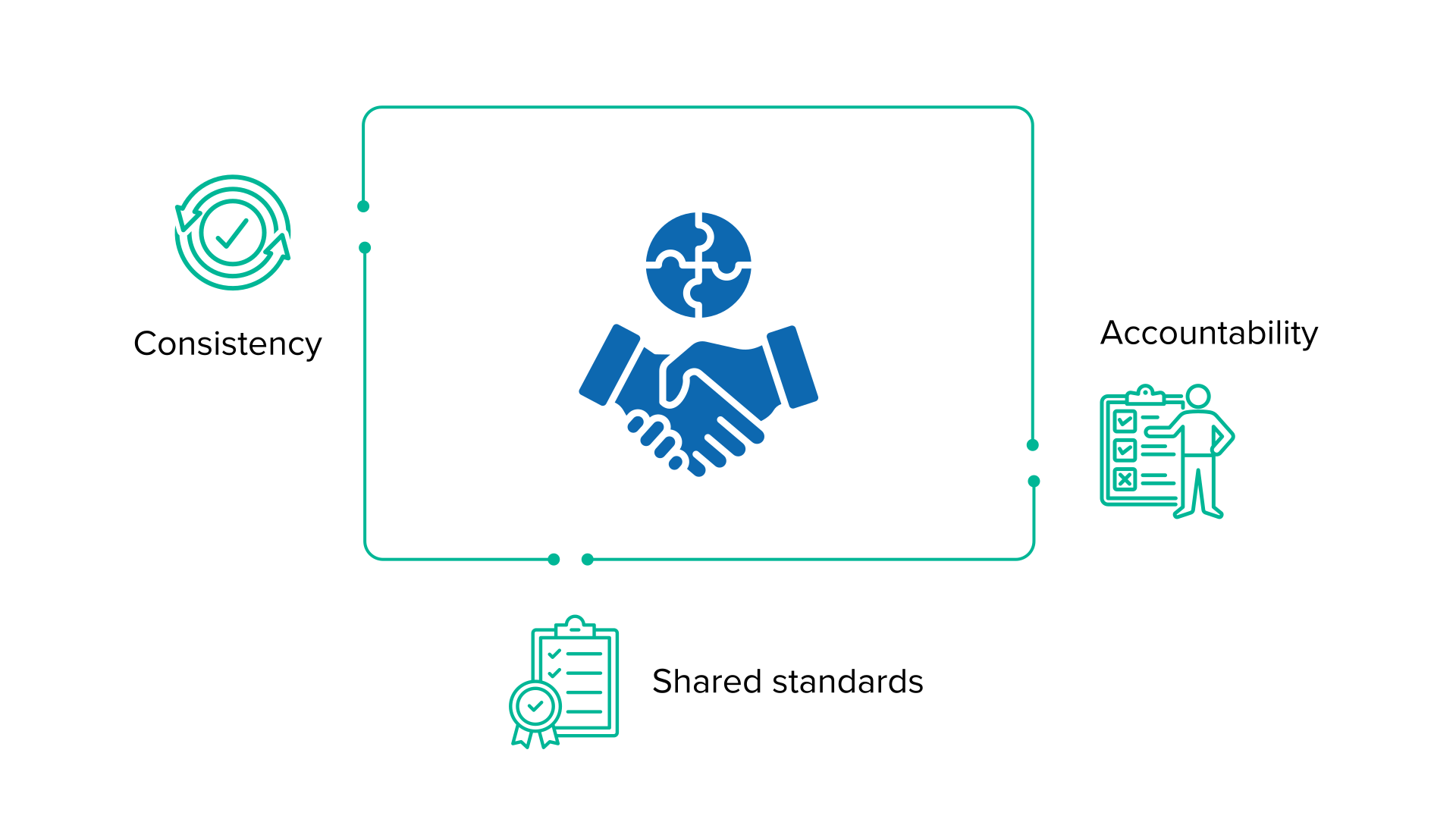
Each collaboration model operates within Academy governance, ensuring consistency, accountability, and shared standards.

Collaboration Models Banner

Principles Guiding Collaboration

Clarity of Roles
Clarity of Roles

Each collaboration defines clear responsibilities for the Academy and partners, reducing ambiguity in delivery and ownership.

Outcome Orientation
Outcome Orientation

Collaborations are framed around defined objectives, deliverables, and evaluation criteria.

Governance and Trust

All collaborations operate in accordance with the Academy’s policies, review processes, and ethical standards.

Flexibility within Structure

Models allow adaptation to partner needs while maintaining a consistent operational framework.

Core Collaboration Models

Program Collaboration

Program Collaboration

Partners co-design and deliver structured learning programs or certifications in collaboration with Academy faculty and mentors.

Suitable for:
Universities Colleges Training Partners Professional Bodies
Lab and Project Collaboration

Lab and Project Collaboration

Partners co-design and deliver structured learning programs or certifications in collaboration with Academy faculty and mentors.

Suitable for:
Institutions Enterprises Research Centers Public Agencies
Research Collaboration

Research Collaboration

Partners engage in applied research initiatives, collaborative studies, or mission-led inquiry with support for execution and publication.

Suitable for:
Research Centers Universities Industry R&D Teams
Publishing Collaboration

Publishing Collaboration

Partners contribute articles, working papers, books, or monographs under the Academy’s editorial and review framework.

Suitable for:
Researchers Institutions Think Tanks Knowledge Partners
Strategic Partnership

Strategic Partnership

Long-term collaboration involving multiple programs, labs, or initiatives, often with shared planning and sustained engagement.

Suitable for:
Anchor Institutions Enterprises Public Programs

Engagement Lifecycle

This lifecycle supports continuity and measurable impact.

Most collaborations follow a standard lifecycle:
Identification of objectives and scope
Selection of a collaboration model
Workspace provisioning and role assignment
Program or initiative execution
Review, outcomes, and continuation

Governance and Responsibilities

This balance ensures durable and credible collaboration.

In all collaboration models:
Partners retain subject and domain leadership
The Academy provides a platform, governance, and standards
Quality, integrity, and accountability are jointly upheld

Choosing the Right Model

Custom combinations may be used where appropriate.

The Academy works with partners to identify the most appropriate collaboration model based on:
  • Institutional goals
  • Nature of engagement
  • Duration and scale
  • Desired outcomes
faq icon Frequently asked questions

Collaboration Models define structured ways for institutions and partners to engage with the Academy on programs, labs, research, and publishing.

Universities, research centers, enterprises, public agencies, and approved partners can collaborate through defined models.

Yes. Models provide structure while allowing adaptation to partner objectives and engagement needs.

All collaborations operate under Academy governance, policies, and review standards to ensure quality and accountability.

Learn with purpose. Build with responsibility. Programs, labs, and research for applied digital capability.